Artists
- Home
- Artists
&w=3840&q=80)
April Spencer
Wardapi Tjukurrpa
Art Centre - Tangentyere Artists
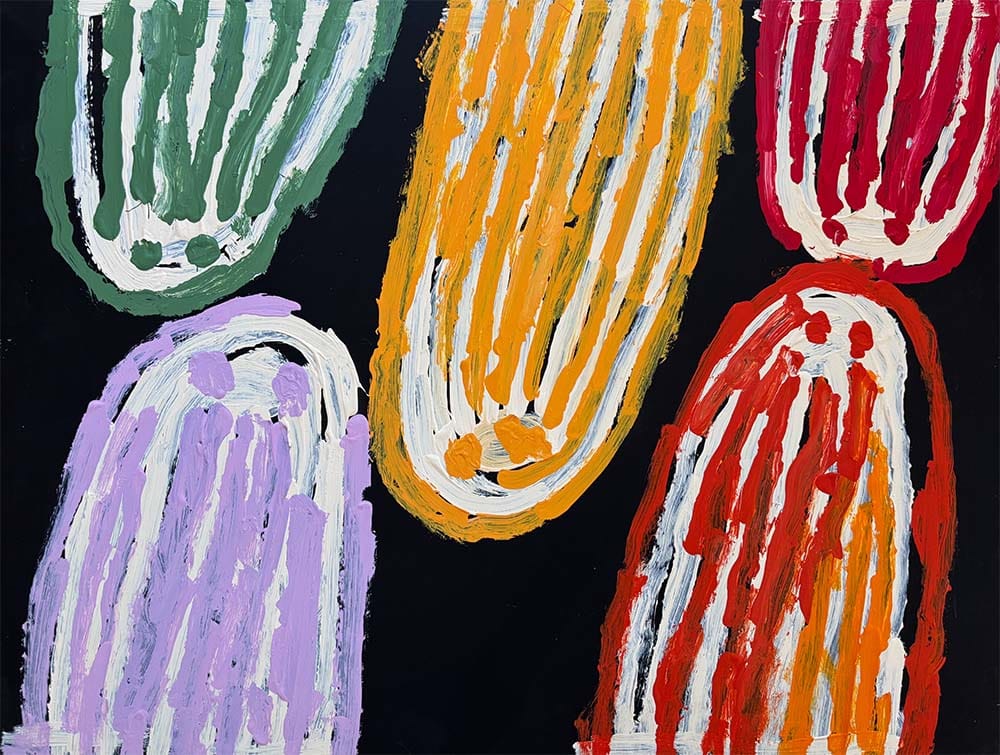
This work tells the story of women hunting Wardapi (sand goanna) in the sand dunes. Wardapi dig deep, interconnected burrows, and women work together to find each opening, covering some and digging others to guide the goanna out.
It is a practice of knowledge, skill and collective effort grounded in connection to Country.
April Spencer, born in Yuendumu in 1966, has painted for most of her adult life and comes from a strong Warlpiri lineage. She learned from her brother, artist Andrew Spencer Japaljarri, and her father, Walpajirri Jungarrayi, a senior Law man.
Working from Tangentyere Artists, she also supports her sister Isobelle as a translator, and her paintings share important Warlpiri Tjukurrpa through a classic style.
Doris Thomas
Titjikala - Pension Day
Art Centre - Tangentyere Artists
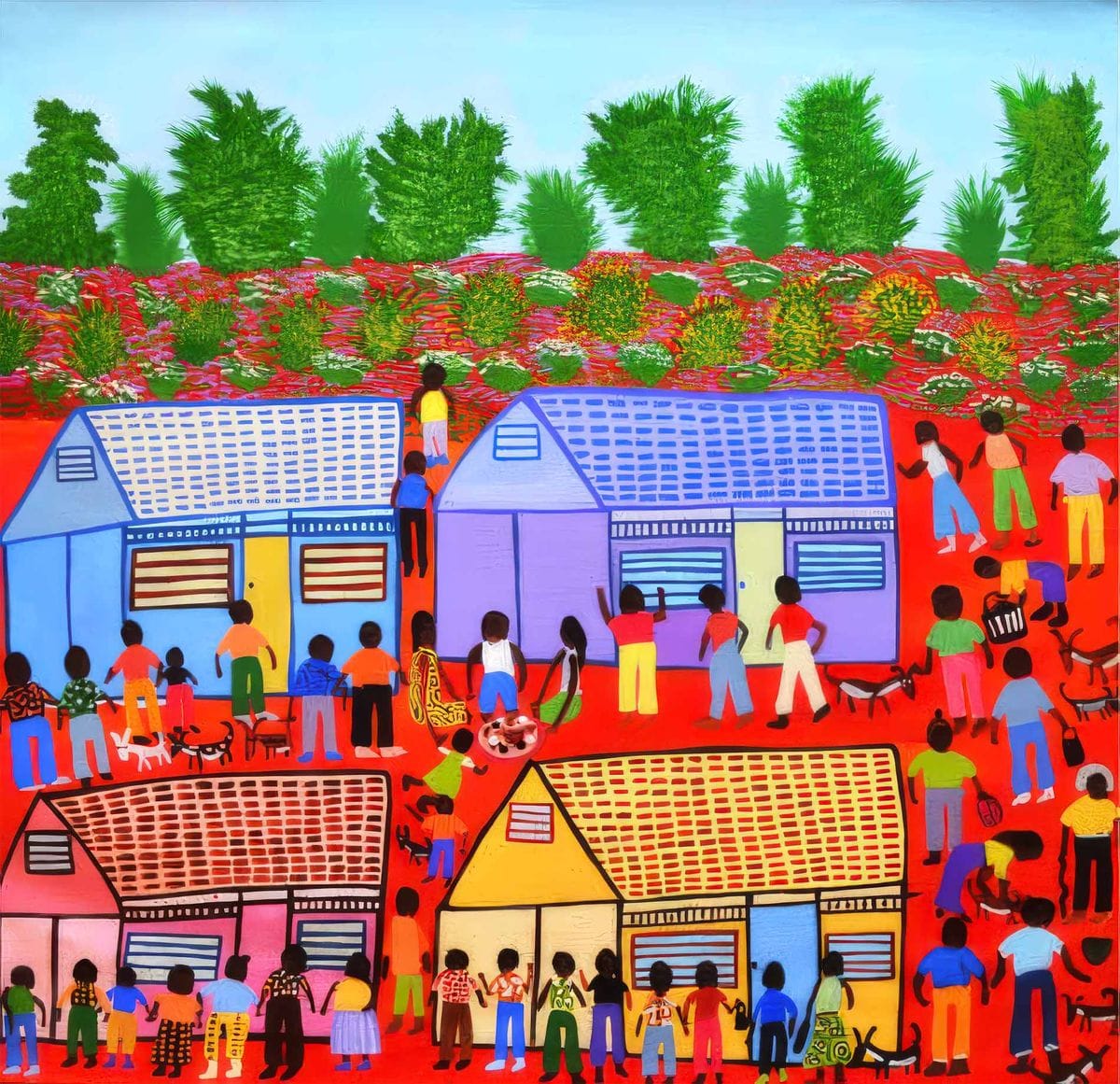
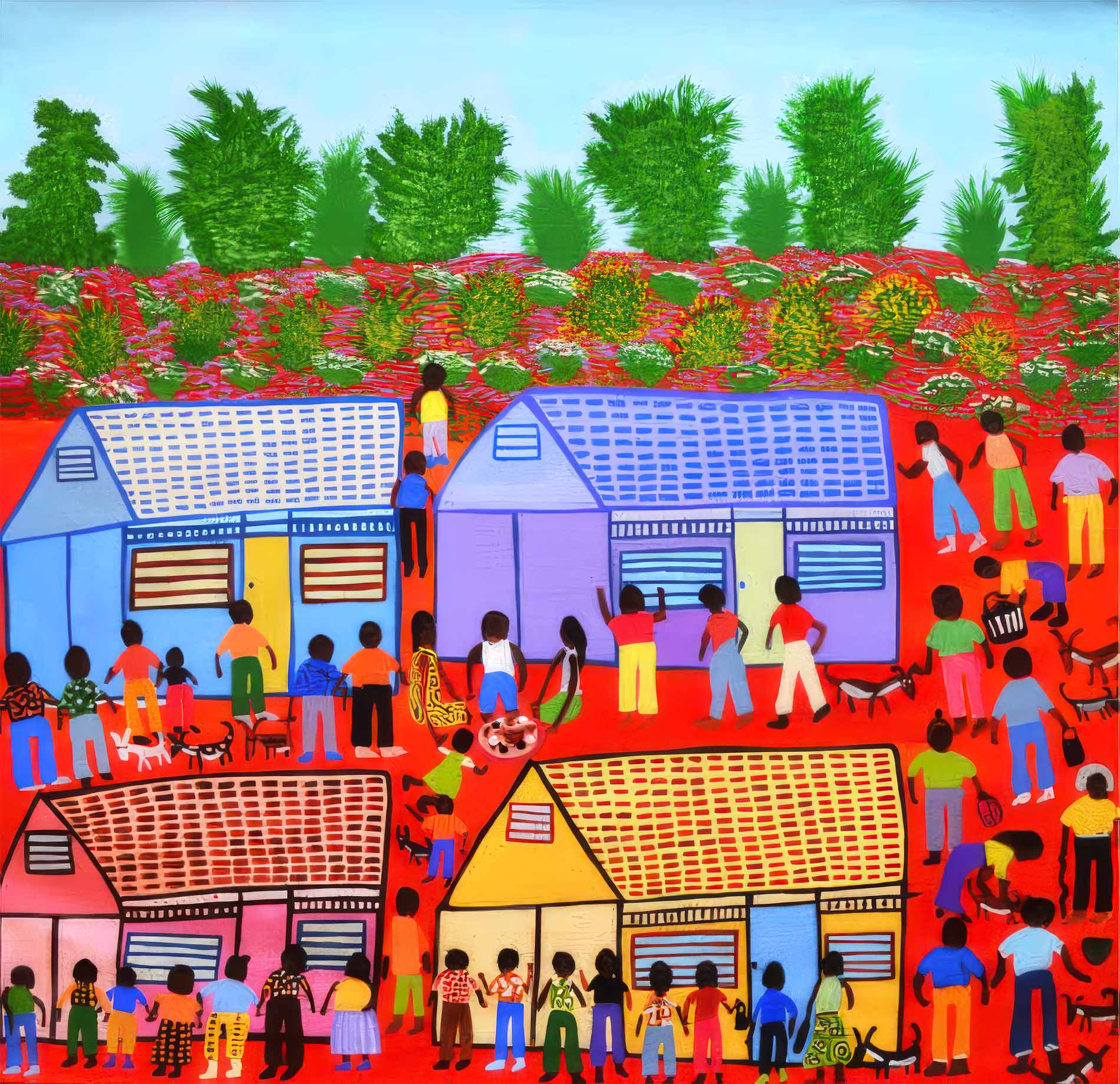
Doris Thomas’ work captures lived memories of Country and community, mapping places such as Deep Well, Titjikala and Alice Springs through detailed, expressive compositions. Her paintings reflect both past and present, recalling childhood on station, family life and the changes experienced as communities shifted over time, sharing stories of resilience, movement and belonging connected to her Tjukurrpa of Pigeon Rockhole.
Born in 1948 at Deep Well Station south of Alice Springs, Doris Thomas (Arlyetilhe) was a Luritja artist who lived and worked in Mparntwe. She joined Tangentyere Artists in 2010 and became known for her intricate mark-making and richly layered landscapes, with works now held in major national collections.
Carol Young
Waru Dreaming
Art Centre – Ninuku Arts
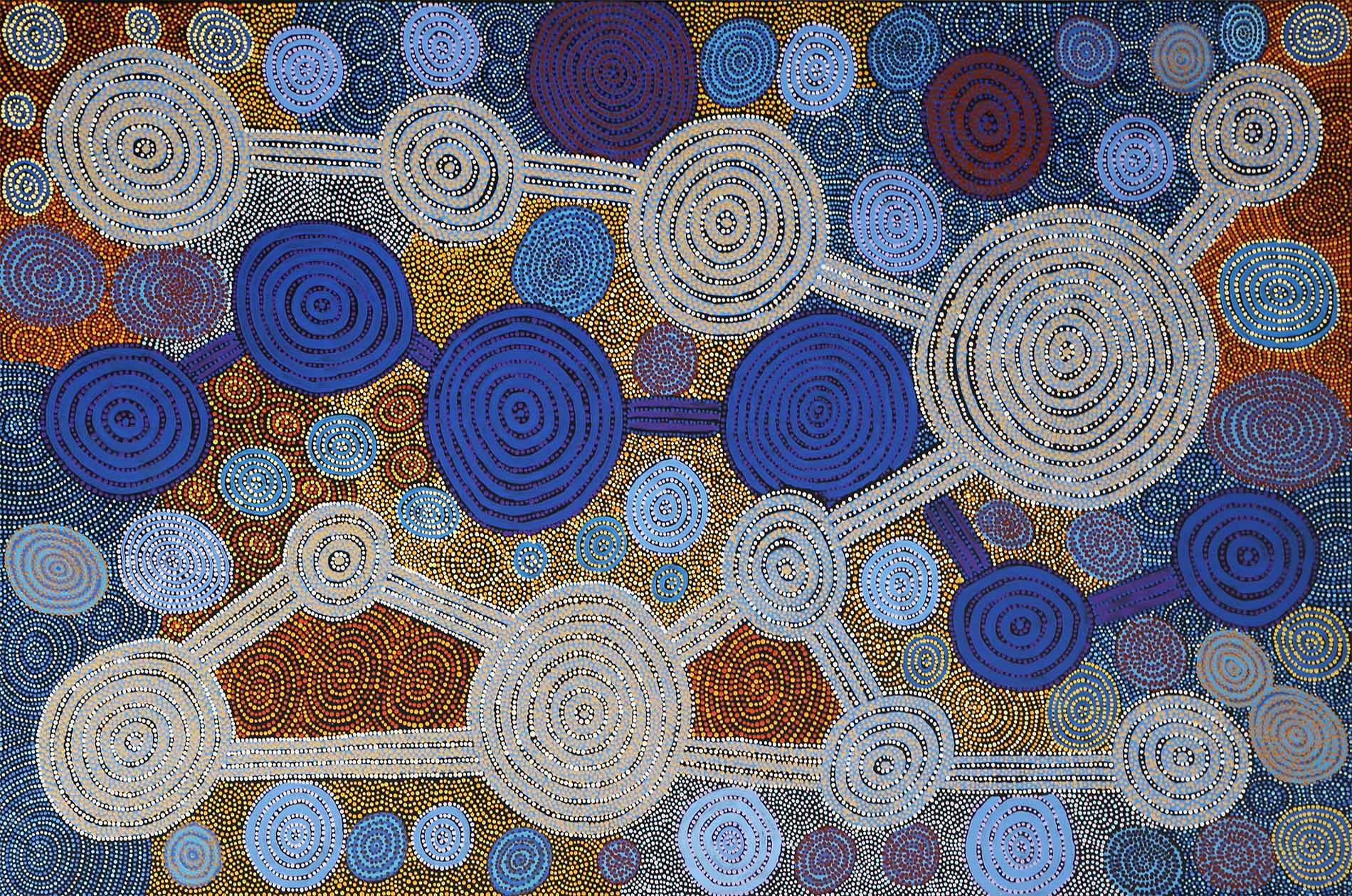
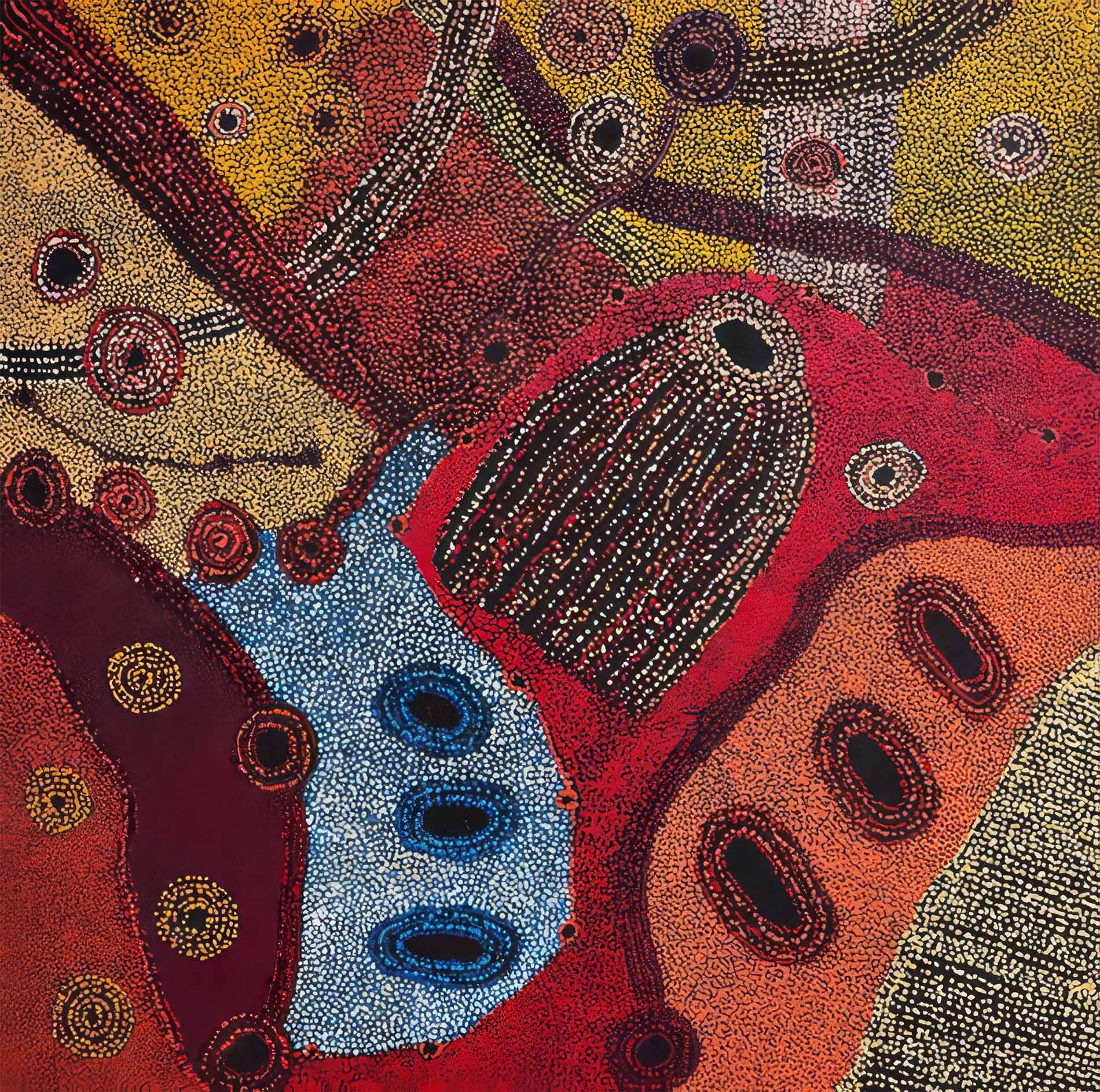
This work tells a Tjukurpa story from Watarru, where bush turkey lived among the large rock formations. In the story, bush turkey takes fire from Anangu and carries it far away to the sea, a story of movement, power and survival held within Country and passed down through generations.
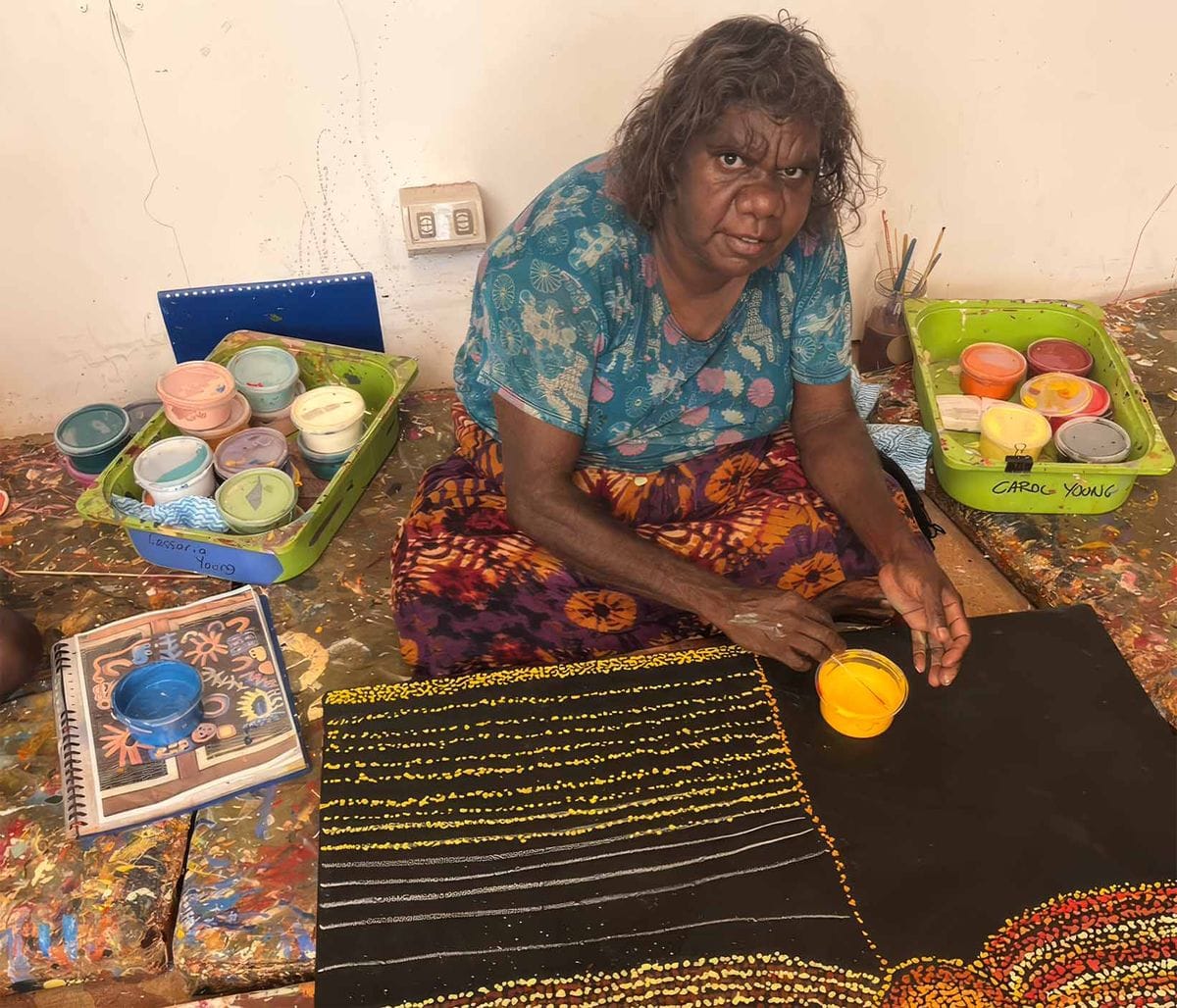
Carol Young, born in 1972 in Alice Springs and now living in Pipalyatjara, comes from a strong Anangu lineage. Her father, Stanley Young, was a senior Law man, and her grandmother, the late Nyankula Watson, was an important Western Desert painter.
Through detailed dot work and sweeping brushstrokes, Carol paints the stories passed down through her family, sharing Tjukurpa and maintaining cultural knowledge.
Judith (Anya) Samson
Emu Tracks to Puntawarri
Art Centre – Martumili Artists
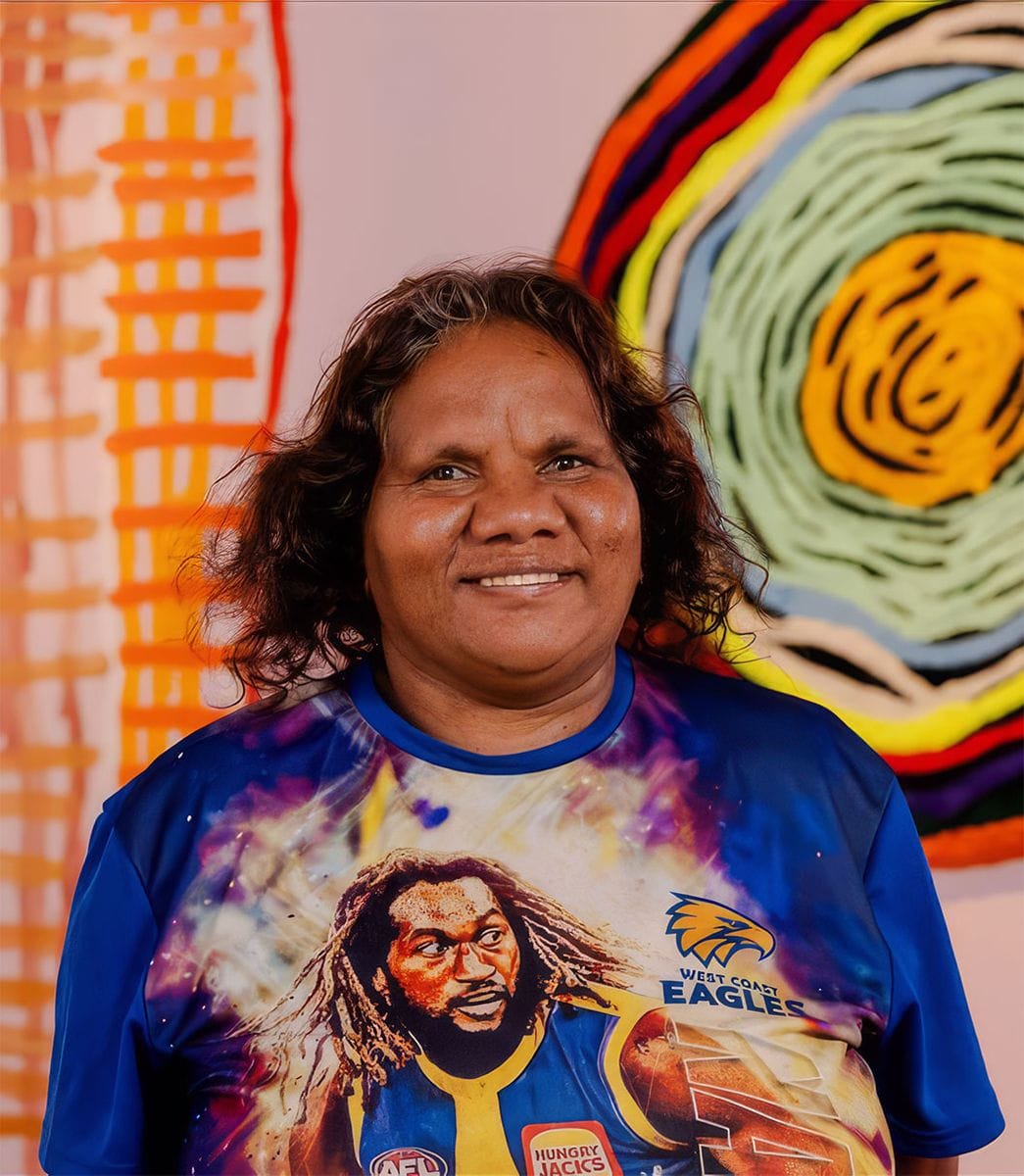
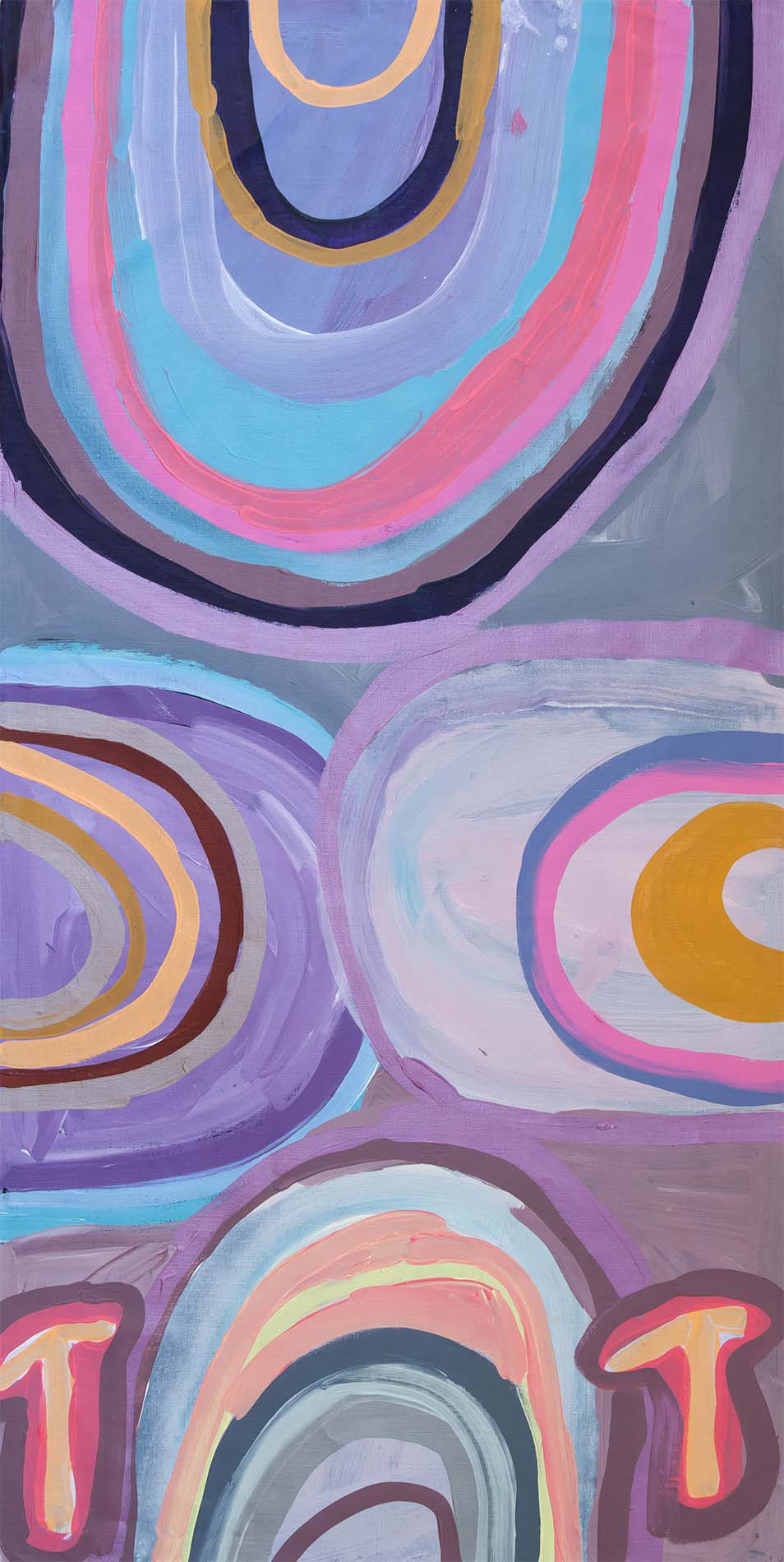
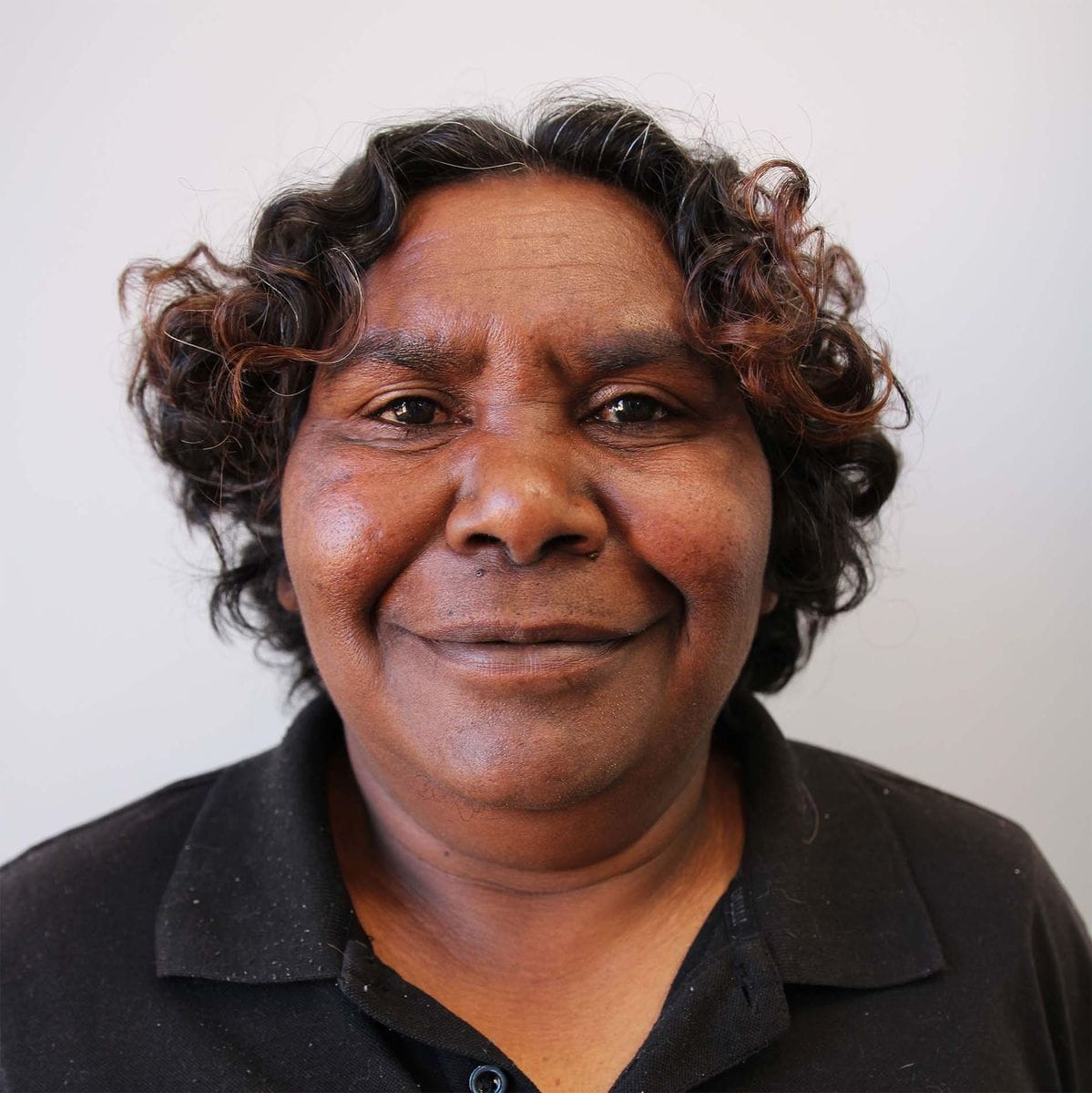
This work depicts Karlaya (emu) travelling across Country toward Puntawarri, following water sources through the desert. Their tracks map movement, survival and deep knowledge of land, reflecting the seasonal journeys of Martu people who travelled between waterholes hunting and gathering bush tucker. As Judith Anya Samson says, “Emu go to the springs to have a drink of water and then move on to the next one.” Born in Port Hedland and raised between Jigalong and Puntawarri, Anya is a Martu artist taught by her grandmother, senior artist Dadda Samson (dec.). Now a leading voice among Martumili Artists, she paints her ngurra (home Country) using bold colour and expressive forms, sharing stories of Country, culture and identity.
Lauren Bloomfield
End of Season
Art Centre – Keringke Arts
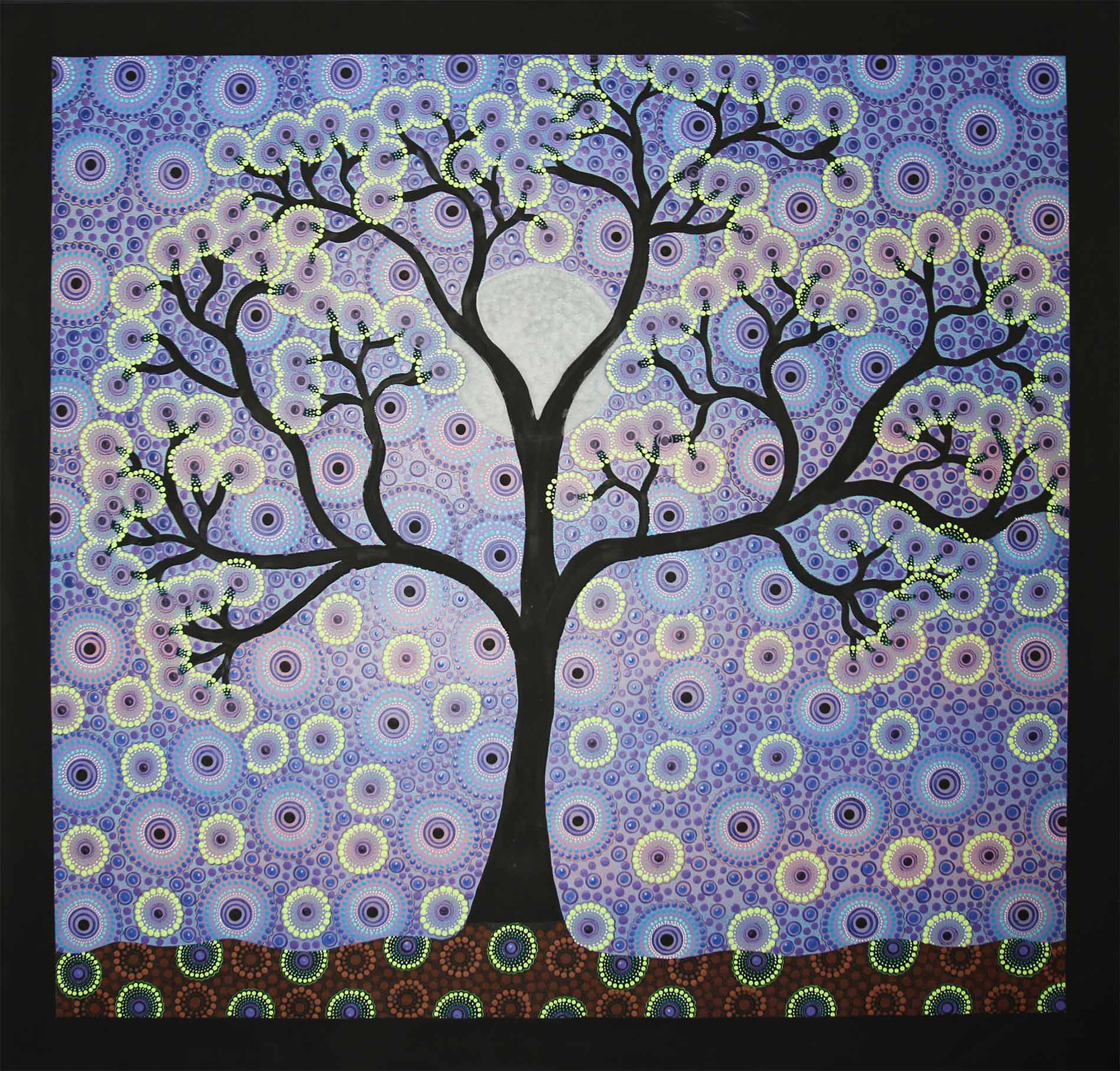
End of Season reflects the deep relationship between language, culture and Country.
In Aboriginal culture, language carries knowledge about land, seasons and the ways people live with and care for Country, and these understandings are often expressed visually through art.
In this work, Lauren Bloomfield uses dot painting to represent the rhythms of Country — the passing seasons, renewal of life and knowledge carried across generations — creating a visual expression of story, memory and connection to place.
Born in 1982, Lauren is an Arrernte artist from Santa Teresa who learned to paint from her mother and grandmother and is part of a new generation continuing the legacy of Keringke Arts with her vibrant, expressive style.
NITA Artists for Voyages
Journey to Uluru
Inawantji Scales, April Barry, Trevor (Ethan) Burton, Akiyah Macumba Iselin-Blumberg, Agnes May
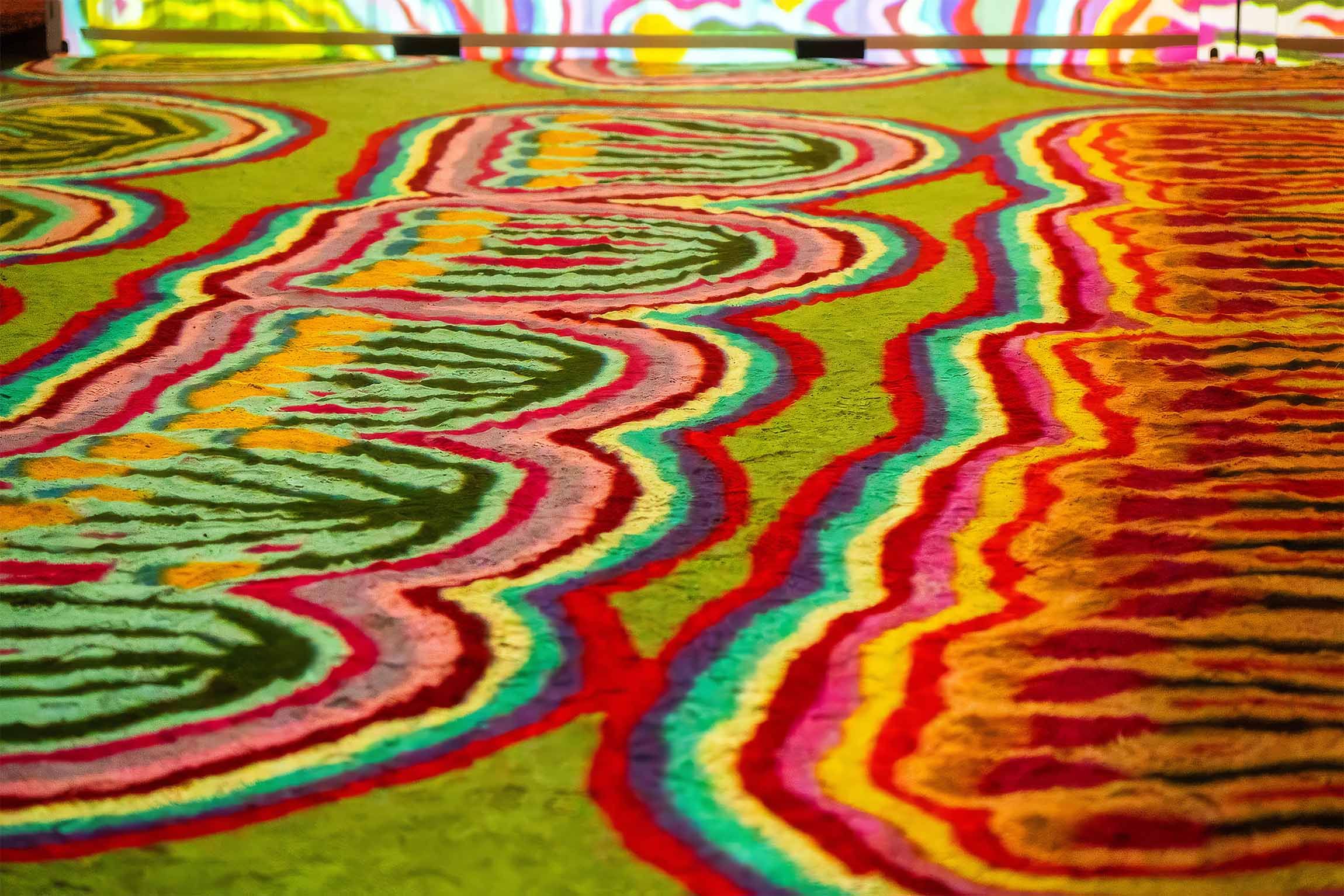
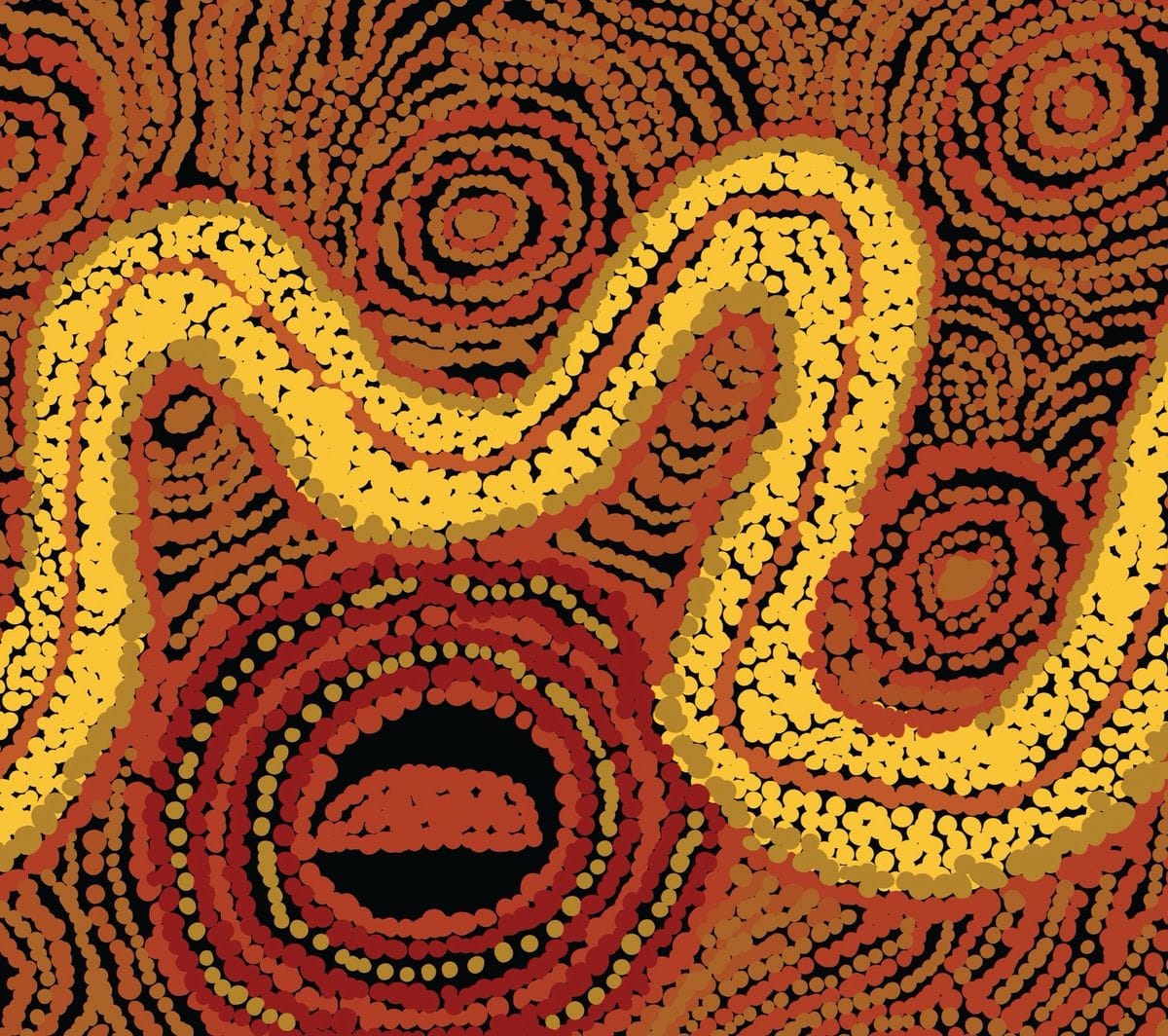
Journey to Uluṟu reflects the shared journeys of five Anangu trainees through the National Indigenous Training Academy (NITA), tracing both physical and personal pathways to Uluṟu and exploring connection to Country, cultural identity, growth and opportunity.
Created by April Barry, Trevor (Ethan) Burton, Akiyah Macumba, Agnes May and Inawantji Scales, the painting brings together individual stories into a collective expression of learning, community and future direction.
April Barry is a Pitjantjatjara Yankunytjatjara woman whose work reflects strong family and cultural identity. Trevor (Ethan) Burton is an Anangu man from Amata grounded in Tjukurpa, while Akiyah Macumba is a young Yankunytjatjara and Pitjantjatjara woman exploring creativity and new pathways. Agnes May supports community through cultural knowledge, and Inawantji Scales is an emerging artist connected to Country.
The artwork now features on NITA trainee uniforms, carrying these stories into everyday life and reflecting NITA’s role in supporting young Indigenous people through training and employment.
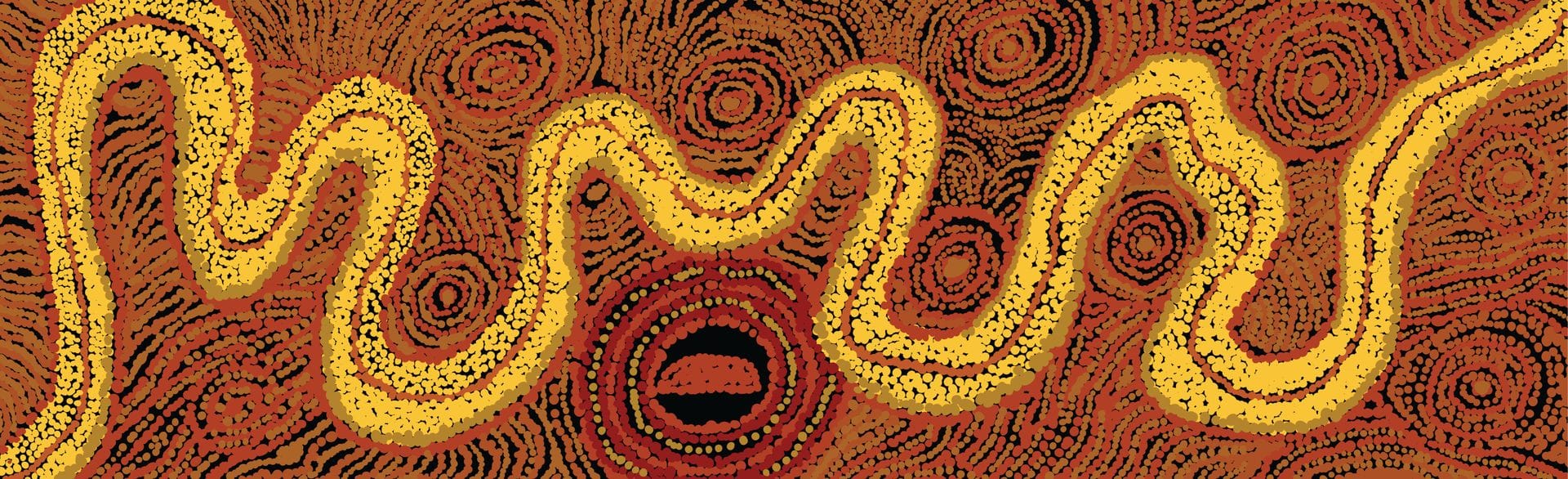
Journey to Uluru © NITA Artists Voyages, Copyright Agency, 2026
Inawantji Scales, April Barry, Ethan Burton, Akiyah Macumba Iselin-Blumberg, Agnes May
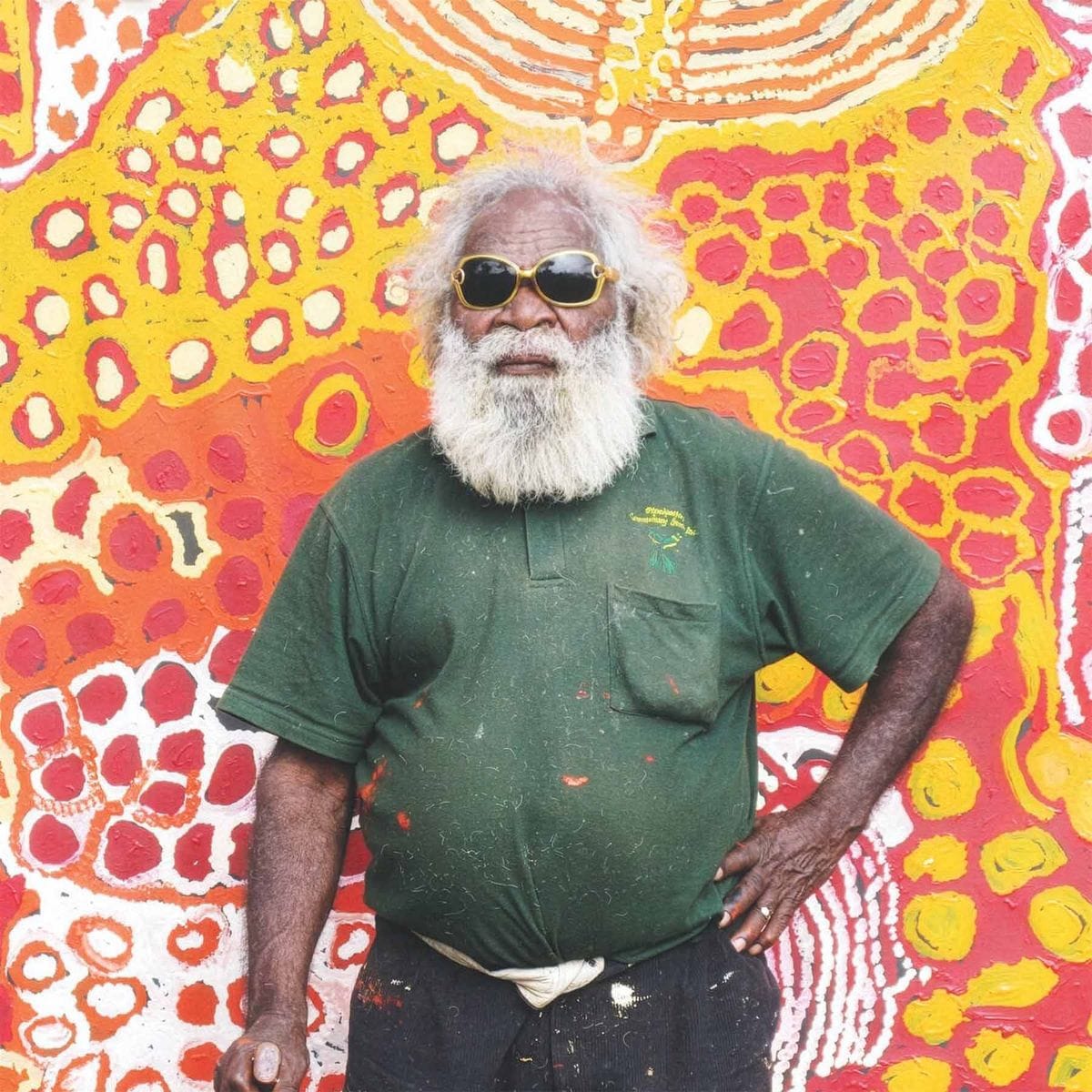
Kunmanara (Harry) Tjutjuna
Wanka: Spider
Art Centre – Ninuku Arts
Kunmanara (Harry) Tjutjuna was born in the bush around 1930 at a place known as Walytjatjara. He was one of the most senior Law men of the area, a revered artist and Ngangkari (traditional healer). Kunmanara went to school in Pukatja but he later moved on to work at a settlement, where he sank bores, did fencing and gardening and tended to the animals. He also worked as a stockman, mustering cattle for many years.
He became a full-time artist in 2005 at Ernabella Arts before moving permanently to Pipalyatjara in 2008, where he continued painting at Ninuku Arts Centre. He had a unique approach to painting, exhibiting a quirky representation and bold confidence.
Mr Tjutjuna's depiction of a spider is common in his paintings. It represents the ancestral being with whom he most strongly identifies. His connection to the spider relates to his powers as a Ngangkari (traditional healer). "This is a big spider man. Wati paluru Ngangkari (a male traditional healer). He is a powerful and clever man. When rain comes, he hides in his nest. At night time, he changes colour. His name is Wati Wanka (Spider Man). Minyma wanka tjuta (referring to a group of female spiders) are the women and all the children for this man. That’s the story. I am the spider man." - Mr Tjutjuna
A selection of works by Mr Tjutjuna will be available at 8 Hele Gallery alongside other artists from the APY Lands from 4th – 25th April as part of the Tjilpi Mankurpa – Three Old Men exhibition.